How to Rank in ChatGPT: The Complete Guide
Getting your website mentioned inside ChatGPT, Claude, Gemini, or Perplexity can transform your business overnight. Learn the proven strategies for AI citation success.
Why AI Citations Matter More Than Ever
Think about how people use ChatGPT. They don't scroll through ten blue links like they do on Google. They ask a question, get an answer, and if they want to dig deeper, they click the citations. That's it. One click from high-intent users who are already interested in what you have to say.
When your content shows up in AI answers, you're getting three things at once: instant credibility (being cited by AI tells people you're trustworthy), quality traffic (these visitors stick around longer and engage more), and authority building (each citation reinforces your reputation in your field).
Here's what makes this different: around 90% of ChatGPT citations come from websites that aren't even ranking in Google's top 20 results. This isn't traditional SEO anymore. It's about speaking AI's language and becoming the kind of source these platforms trust enough to quote.
How AI Platforms Pick Their Sources
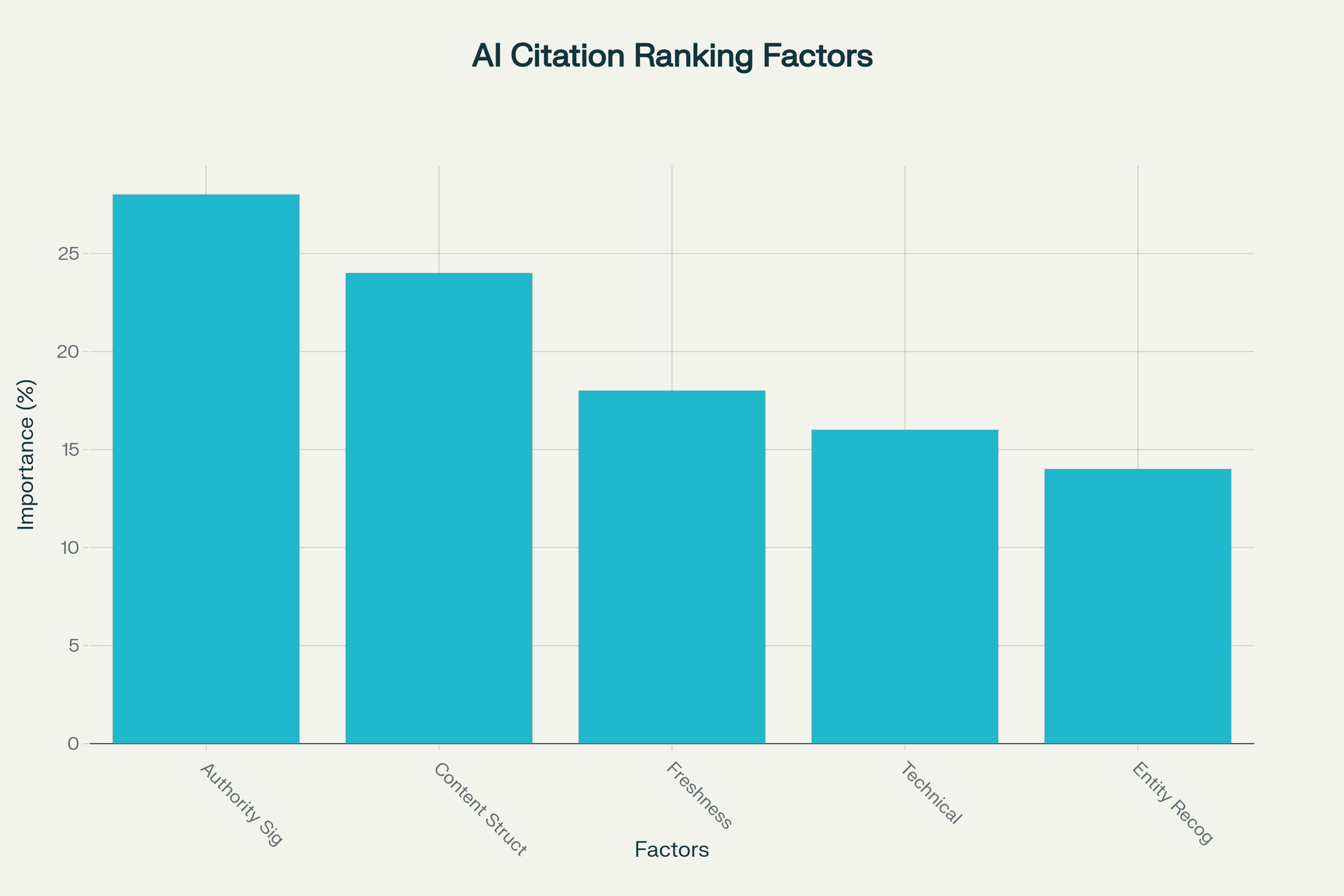
Key factors that influence AI platform citation decisions, based on analysis of citation patterns across ChatGPT, Claude, Gemini and Perplexity
Authority Comes First
AI platforms start with trust. They look for sites that have proven themselves reliable over time. Wikipedia dominates AI citations because it has decades of editorial oversight. Major news outlets get quoted because they have fact-checking processes.
But here's the thing: you don't need to be Wikipedia to get cited. You just need to act like a source that deserves trust. That means being consistent, factual, and transparent about where your information comes from.
Structure Makes Everything Easier
AI systems read fast. They scan your content looking for clear answers to specific questions. If your page is a mess of random paragraphs with no logical flow, they'll skip right past it.
The websites that get cited most often follow predictable patterns:
- Clear headings that match what people actually ask
- Short paragraphs that get straight to the point
- Lists and tables that organize information clearly
- FAQ sections that directly answer common questions
Fresh Content Gets Priority
AI platforms favor recent information, especially for topics that change over time. A page about "2025 marketing trends" will always beat a page about "2023 marketing trends" when someone asks about current strategies. But freshness isn't just about publish dates. It's about keeping your content current with updated stats, new examples, and recent developments in your field.
Building Your Authority Foundation
Before AI platforms will cite you regularly, they need to see you as a real entity, not just another website trying to rank for keywords.
Get Your Business Recognized
Start with the basics. Make sure your business appears in:
- Google Business Profile with complete information
- Industry directories and associations
- Local business listings if you serve local markets
- Professional networks like LinkedIn company pages
The key is consistency. Your business name, address, and description should match exactly across every platform. Even small differences can confuse AI systems and weaken your authority signals.
Create Your Knowledge Graph Presence
This is where most businesses miss out. AI platforms rely heavily on structured knowledge sources like Wikidata, which connects entities to each other through relationships and facts.
If your business meets Wikipedia's notability guidelines, getting a page there is huge. But even if you don't qualify for Wikipedia, you can still build Wikidata entries that help AI systems understand who you are and what you do.
Build Relationships With Other Authorities
AI systems notice when your brand appears alongside other recognized experts. This happens through:
- Guest posts on established industry sites
- Interviews in trade publications
- Speaking at conferences that get covered online
- Collaborating with other recognized brands
- Getting quoted as an expert in news articles
Each mention creates a connection that strengthens your overall authority profile.
Content That Gets Cited
Not every piece of content has the same chance of being quoted. AI platforms have clear preferences for certain types of information.
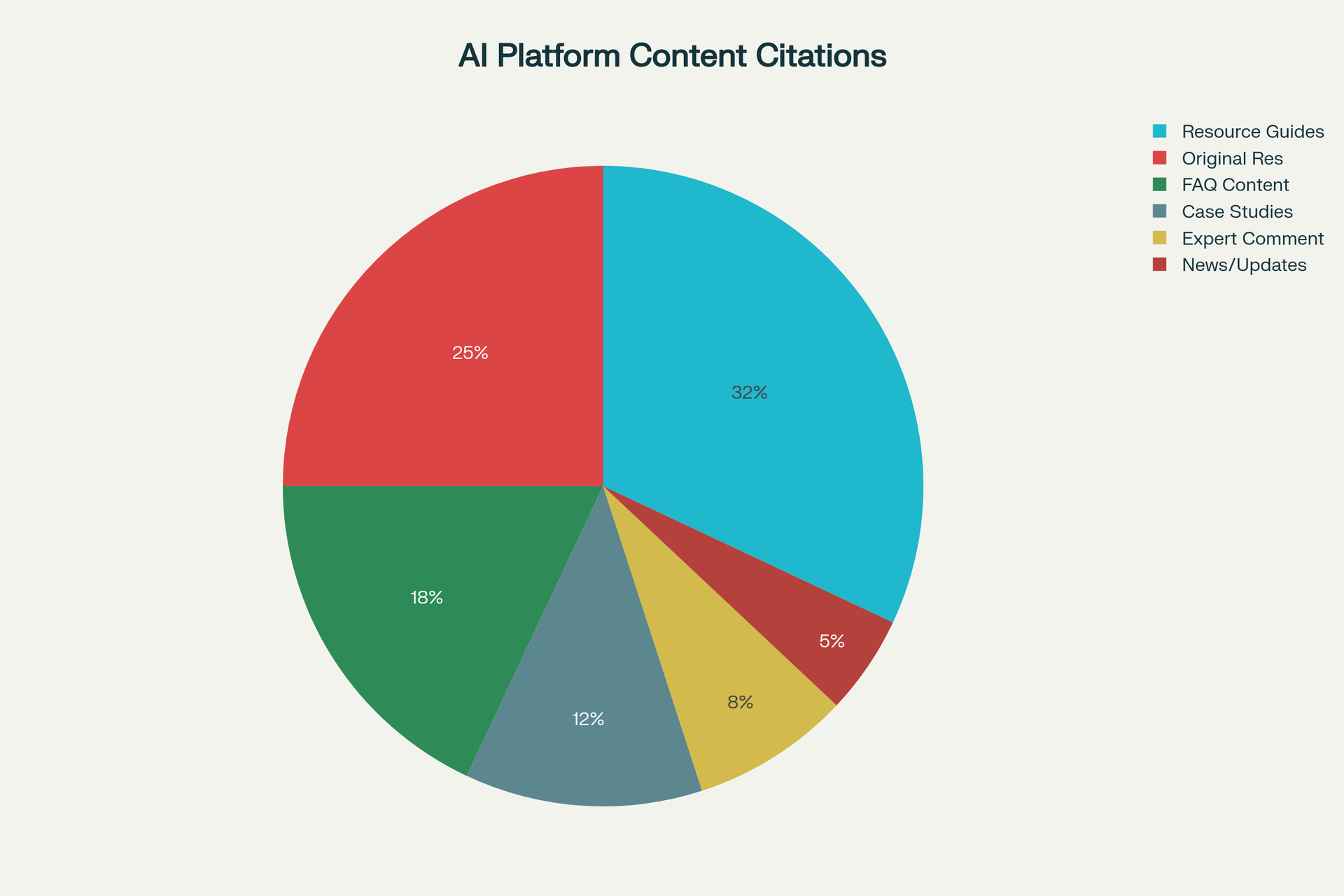
Distribution of content types most frequently cited by AI platforms in 2025
Original Research Wins Big
Nothing beats original data when it comes to AI citations. Even simple research can set you apart:
- Customer surveys about industry trends
- Analysis of your own business data
- Case studies with real results and numbers
- Testing different approaches and reporting findings
The research doesn't need to be academic-level. It just needs to be original, accurate, and useful to people in your field.
Resource Guides Get Quoted Constantly
Big, detailed guides that cover topics from every angle perform incredibly well with AI platforms. Think "The Complete Guide to Email Marketing" or "Everything You Need to Know About Starting a Podcast." These work because they answer multiple related questions in one place.
FAQ Content is AI Gold
FAQ sections are basically pre-formatted for AI consumption. You're already providing questions and direct answers, exactly what AI systems need to respond to user queries.
The trick is writing FAQs that people actually ask, not just the questions you want to answer. Use tools like Answer The Public or check your customer support tickets to find real questions people have about your topic.
Case Studies Provide Proof
When someone asks AI for examples or proof that something works, case studies become incredibly valuable. Detail what you did, what happened, and what the results were. Include specific numbers wherever possible. Instead of saying "increased traffic significantly," say "increased traffic by 127% over six months."
Technical Setup That AI Systems Love
Even great content won't get cited if AI systems can't read it properly. The technical side matters more than most people realize.
Schema Markup is Critical
Schema markup is code that tells AI systems what your content actually means. Without it, AI has to guess what your page is about and how the information relates to user queries.
Priority schema types for AI optimization include:
- Article schema for blog posts and guides
- FAQ schema for question-answer sections
- HowTo schema for step-by-step instructions
- Organization schema for business information
- Product schema for product-related content
Research shows that pages with proper schema markup get cited 40% more often than pages without it.
Clean Code Matters
AI crawlers don't have all day to figure out messy websites. They prefer:
- Fast-loading pages (under 3 seconds)
- Clean HTML without unnecessary code
- Logical heading structures (H1, H2, H3)
- Text content that doesn't require JavaScript to display
- Mobile-friendly responsive design
If your important content is buried behind complex JavaScript or loads slowly, AI systems might skip it entirely.
Writing for AI Understanding
AI platforms process language differently than traditional search engines. They understand context, tone, and meaning in ways that keyword-based systems can't match.
Write Like You're Answering a Friend
The best AI-optimized content sounds conversational and natural. Write like someone just asked you a question and you're giving them a helpful answer. Avoid corporate speak and marketing fluff. AI systems (and users) prefer direct, practical information over promotional language.
Use Natural Question Phrases
People ask AI platforms full questions, not short keyword phrases. Include long-form questions naturally in your content:
- "How long does it take to see results from content marketing?"
- "What's the best way to measure email campaign success?"
- "Why do some businesses fail at social media marketing?"
These question phrases help AI systems match your content with user queries.
Include Specific Examples and Numbers
AI platforms love concrete information they can quote directly. Instead of general statements, provide specific examples:
- "Email open rates in retail average 18.4% according to our analysis of 10,000 campaigns"
- "The most successful LinkedIn posts we've tracked averaged 247 words"
- "Small businesses using video content see 34% more website conversions"
Specific facts are more likely to get cited than general claims.
Platform-Specific Strategies
Each major AI platform has its own behavior patterns. What works perfectly for ChatGPT might not work as well for Claude or Gemini.
ChatGPT Preferences
Claude Optimization
Perplexity Strategy
Gemini & Google AI
Getting Started Today
You don't need to overhaul everything at once. Start with these immediate steps:
Week 1: Audit Your Current Setup
- Check your business information across major platforms
- Review your most important pages for basic optimization
- Set up tracking to monitor current AI citations
Week 2: Optimize Your Best Content
- Add schema markup to your top-performing pages
- Update outdated information and statistics
- Create or expand FAQ sections
Week 3: Plan Your Content Strategy
- Identify topics where you have unique expertise
- Research questions your audience actually asks
- Plan original research or data collection projects
Week 4: Start Consistent Testing
- Set up regular monitoring of AI platform responses
- Test different content approaches and track results
- Begin building relationships with other industry authorities
Key Takeaways
Entity authority is fundamental. AI platforms cite sources they recognize as authoritative entities. Build your brand entity through consistent mentions, structured data, and knowledge graph presence.
Content quality matters more than ever. AI platforms prioritize complete, accurate, well-researched content. Thin content won't get cited.
Technical optimization enables discovery. Schema markup, clean HTML structure, and semantic optimization help AI platforms understand and cite your content.
This is a long-term strategy. Building AI search visibility takes time. Start now to establish authority before your competitors do.
The opportunity is huge, but it won't last forever. As more businesses catch on to AI optimization, competition will increase and the early advantages will diminish. The time to start is now, while the landscape is still relatively open and the strategies still provide outsized returns.