Why Programatic SEO Comparison Pages Win BIG for AI SEO
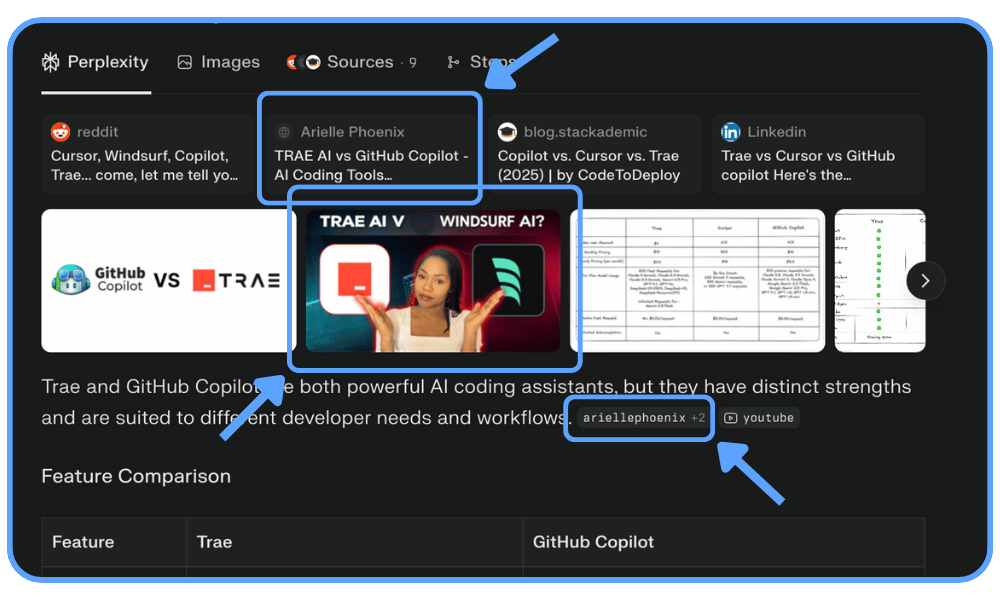
When AI engines like ChatGPT, Perplexity, and Google AI started answering questions directly, search changed forever.
But here’s what most people miss: these AI tools have a massive appetite for one specific type of content that can transform your business overnight…. Programatic SEO comparison pages.
Comparison pages aren’t just ranking well in traditional Google search anymore. They’re a secret weapon that gets your brand mentioned, cited, and recommended by AI engines to millions of searchers every single day.
After building and ranking pages like my AI tools comparison directory and specific comparisons like TRAE vs GitHub Copilot, I’ve seen firsthand how these pages become traffic magnets that AI systems can’t ignore.
The results speak for themselves: companies using this strategy are seeing 300-4000% increases in organic traffic, and more importantly, the businesses being compared are gaining massive brand exposure.
What Does This Teach Us About The Power of Decision-Making Queries?
Well, the thing about search behaviour that changed everything is that as we are constantly spoilt for choice and new products, tools and solutions are hitting the market every day, we don’t really search for products anymore. We search ideas because we don’t know what the best solution is.
That’s our FOMO kicking in.
When someone types “best project management software” or “TRAE vs GitHub Copilot,” they’re not browsing, their building their knowledge around the problem they are trying to solve for, then, they’re buying.
Their research and buying is often done in a single but multi-step process. Narrowing down their options, addressing their fear of not getting the best deal or buuying the wrong one and they want someone to help them decide between two (or sometime three) specific choices.
This is what marketers call “bottom-of-funnel” intent, and despite it’s name, it’s pure gold and often under-valued because without a
While general landing pages convert at around 6.6%, comparison pages regularly hit 11-15% conversion rates, with some reaching as high as 25%.
Comparison pages significantly outperform other content types in conversion rates
The reason is simple: comparison searchers are one click away from becoming customers. They just need the final push to make their decision.
But here’s where it gets really interesting for AI search engines.
Why AI Search Engines Are Obsessed with Comparison Content
AI engines like ChatGPT, Perplexity, and Google’s AI Overviews aren’t just crawling the web randomly. They have specific preferences for the type of content they cite and recommend.
After analyzing over 366,000 citations across multiple AI platforms, researchers found some fascinating patterns:
- ChatGPT heavily favors comparison portals – 17% of their citations come from comparison websites, alongside blogs (21%) and authoritative sources
- Perplexity loves detailed blog content – 39% of their citations are from blogs that provide comprehensive comparisons
- Google AI Overviews blend both approaches – 40% blogs, 26% news, with a strong preference for structured comparison content

Although UGC platforms like Reddit are at the top of the food chain for AI SEO, these AI search engines also heavily favour blogs and comparison content when citing sources.
Here’s why this happens: AI engines are designed to help users make decisions. When someone asks “Which is better, X or Y?”, these systems look for content that directly addresses that question with facts, features, and clear comparisons.
Traditional product pages rarely get cited by AI engines because they’re promotional. But comparison pages? They’re educational. They present both sides. They help users understand trade-offs. This makes them perfect source material for AI responses.
The Brand Goldmine: Why Companies Being Compared Win Twice
This is where most people completely miss the opportunity. Everyone focuses on ranking their own comparison pages, but they ignore the massive benefit of BEING compared by others.
When your brand gets featured in someone else’s comparison page, you’re not just getting a backlink. You’re getting something much more valuable: narrative control.
Think about it from TRAE’s perspective in my TRAE vs GitHub Copilot comparison. By having their product featured in a detailed, fair comparison, they get several wins:
1. Brand Association with Market Leaders
Getting compared to GitHub Copilot (owned by Microsoft) immediately positions TRAE as a serious player. It’s like being invited to sit at the adults’ table.
2. Third-Party Credibility
When I write about TRAE’s strengths and weaknesses honestly, readers trust that assessment more than TRAE’s own marketing copy.
3. AI Engine Visibility
Every time an AI engine cites my comparison, both brands get mentioned. TRAE benefits from GitHub’s search volume without paying for it.
4. Reputation Management
TRAE gets to control their narrative by making sure accurate, positive information about their product is easily findable by AI engines.
5. Free Market Research
The comparison reveals what users actually care about when choosing between tools, giving TRAE insights into their positioning.
This is why smart companies are actively encouraging comparison content about their products. They’re not hiding from comparisons – they’re embracing them.
The Programmatic SEO Secret Sauce
Here’s where programmatic SEO makes this strategy incredibly powerful: you can scale these comparison pages across hundreds or thousands of keyword combinations.
Instead of manually creating one comparison page, you can build systems that generate:
- Tool A vs Tool B comparisons for every combination
- “Best alternatives to [Competitor]” pages
- “[Category] comparison charts” with multiple tools
- “Why choose X over Y” articles
The companies crushing it with this approach follow a simple formula:
1. Data Collection
Gather comprehensive data about competitors – features, pricing, use cases, pros, cons, user reviews.
2. Template Creation
Build flexible page templates that can populate with any two tools being compared.
3. Keyword Mapping
Map every possible comparison keyword to automatically generate relevant pages.
4. Content Quality
Ensure each generated page provides genuine value, not just keyword stuffing.
The results can be staggering. One AI image generator client grew from 67 monthly signups to over 2,100 signups in 10 months using this exact approach – a 3,035% increase.
Real Success Stories That Prove the Method
The companies getting massive wins from programmatic SEO comparison pages share similar patterns:
Sunset started from zero organic traffic and hit 27,000 monthly visitors in just four months by targeting startup closure comparisons and layoffs.
Twingate added over 40,000 monthly visitors by creating comparison content about cybersecurity solutions, positioning themselves against established players.
Airtable grew their organic traffic by over 13,000 monthly visitors using programmatic templates that showcase different use cases and competitor comparisons.
Wise attracts approximately 49 million monthly organic visitors by creating localized comparison pages for currency exchange services.
But here’s what these success stories have in common: they’re not just generating traffic. They’re generating the RIGHT traffic – people who are ready to buy.
The AI Search Revolution Changes Everything
Traditional SEO focused on ranking number one in Google. AI SEO is about getting cited and mentioned in AI responses.
Here’s the difference: when someone searches “best project management tools” in Google, they see 10 blue links. When they ask ChatGPT or Perplexity the same question, they get one comprehensive answer that mentions 3-5 tools with explanations.
If your tool gets mentioned in that AI response, you’re not competing with 9 other results. You’re getting direct exposure to the searcher with context about why you might be the right choice.
This is why comparison content works so well for AI engines:
1. Structured Information
AI engines love content that clearly explains differences, features, and use cases in an organized way.
2. Multiple Entity Coverage
Comparison pages naturally mention multiple brands, giving AI engines more entities to work with.
3. Decision-Making Context
These pages provide the context AI engines need to make recommendations based on specific user needs.
4. Fresh, Relevant Data
Good comparison pages stay updated with current pricing, features, and user feedback.
5. Neutral Perspective
AI engines favor sources that present balanced views rather than promotional content.
Building Your Comparison Page Empire
Ready to build your own programmatic SEO comparison machine? Here’s the step-by-step process that actually works:
Step 1: Competitor Research
Don’t just research your direct competitors. Find every tool, service, or product in your category – including niche players and indirect competitors. The long tail of less popular options often has better ranking opportunities.
Step 2: Keyword Pattern Analysis
Use tools like SE Ranking’s Keyword Suggestion tool to find comparison patterns. Look for:
- “[Your Tool] vs [Competitor]”
- “[Competitor] alternative”
- “Best [category] for [use case]”
- “[Tool] comparison”
- “Why choose [X] over [Y]”
Step 3: Content Template Development
Create flexible templates that work for any comparison while maintaining quality. Your template should include:
- Clear overview of both tools
- Feature comparison table
- Pricing breakdown
- Pros and cons for each
- Specific use case recommendations
- User testimonials or reviews
Step 4: Data Infrastructure
Build a system to keep your comparison data updated. This might include:
- API connections to pricing data
- Regular competitor feature audits
- User review monitoring
- Performance metric tracking
Step 5: Quality Assurance
Every generated page should provide genuine value. Ask yourself: would this page help someone make an actual decision? If not, improve the template.
Step 6: AI Optimization
Structure your content for AI engines by using:
- Clear headings and subheadings
- Bullet points and lists
- Comparison tables
- Specific data points
- Neutral, informative language
Measuring Success the Right Way
The companies seeing massive wins from this strategy track specific metrics that matter:
Traffic Metrics
- Organic keyword rankings for comparison terms
- Total organic traffic growth
- Referral traffic from AI engine citations
Engagement Metrics
- Time on page for comparison content
- Pages per session
- Bounce rate for comparison pages
Business Metrics
- Conversion rates from comparison pages
- Revenue attribution to comparison content
- Cost per acquisition through organic comparison traffic
AI Visibility Metrics
- Citations in AI engine responses
- Brand mentions in AI-generated content
- Ranking positions in AI recommendations
Based on industry data, successful programmatic SEO campaigns typically see:
- 30% faster ranking improvements compared to traditional methods
- 340% average ROI for specialized B2B tools
- 67% reduction in time-to-revenue
- 145% higher conversion rates vs general content
The Future Is Already Here
AI search isn’t coming – it’s already dominating how people find information. According to recent data:
- AI traffic from ChatGPT and Perplexity grew 4x in 2025 compared to 2024
- Over 11% of Google queries now trigger AI Overviews
- ChatGPT alone handles over 10 million daily queries
Companies that understand this shift and optimize for AI citations are building massive competitive advantages while their competitors are still focused on traditional SEO tactics.
The brands winning in this new landscape aren’t just creating better products. They’re creating better information about their products – and their competitors’ products – that AI engines can find, understand, and recommend.
Your Next Move
Programmatic SEO comparison pages aren’t just a tactic – they’re a fundamental shift in how successful companies approach organic growth in the AI era.
The companies already implementing this strategy are seeing results that seemed impossible just a few years ago. 3,000% increases in signups. 400% growth in organic traffic. Millions of monthly visitors generated through systematic, scalable content creation.
But the real power isn’t just in the traffic numbers. It’s in the narrative control. When you create comprehensive, fair comparisons in your market, you get to shape how AI engines understand your space. You get to define the criteria that matter. You get to position your brand within the broader competitive landscape.
Every day you wait, your competitors might be building their own comparison content empires. The question isn’t whether this strategy works – the results prove it does. The question is whether you’ll implement it before your competition figures it out.
The tools are available. The data shows the method works. The only thing missing is execution.
Start with one comparison page. Track the results. Scale what works.
In six months, you might be looking at traffic numbers that make your current organic performance look like a rounding error. And your brand will be the one AI engines recommend when searchers need to make decisions in your market.
The programmatic SEO comparison page revolution is happening right now. The only question is: will you be part of it?